Solar Energy Solutions Provider

What Size Are Solar Walkways?

Solar walkways are becoming a popular addition to solar panel installations, particularly on commercial and industrial rooftops. They provide safe and stable access for maintenance personnel without damaging the roof surface or disturbing the solar array. But when designing or installing these systems, one common question arises — what size are solar walkways?

walkway solar roof

The size of a solar walkway can vary depending on the type of project, building design, and maintenance requirements. In most cases, solar walkways are between 600mm and 1000mm (about 24 to 40 inches) wide. This width provides enough space for one person to walk comfortably while carrying tools or equipment. For areas that require two-way access or where larger maintenance machinery is used, wider walkways may be installed.

The length of the walkway depends entirely on the layout of the solar array. Some rooftops only need short access paths between rows of panels, while others require continuous walkways that extend across the entire system. The goal is to create safe, direct routes to essential components such as inverters, junction boxes, and cable runs.

In terms of material and structure, solar walkways are often made from aluminum or glass-reinforced plastic (GRP), chosen for their durability, slip resistance, and lightweight properties. Aluminum walkways, in particular, are favored in the solar industry because they are corrosion-resistant and easy to install without adding significant load to the roof.

To ensure safety and stability, walkways are typically mounted above the roof surface using non-penetrating supports or clamps that work with existing solar mounting systems. Manufacturers like SIC Solar, a producer and supplier of photovoltaic mounting structures, design integrated walkway and racking solutions that can be adapted to different roof types and system configurations. This integration allows installers to maintain both safety and structural integrity without compromising the performance of the solar array.

The height of the walkway is usually kept minimal, just enough to provide clearance above roof irregularities or drainage channels. Most systems feature a modular design, meaning sections can be added, removed, or reconfigured as needed. This flexibility makes solar walkways suitable for both small residential rooftops and large-scale commercial installations.

Ultimately, the right walkway size depends on balancing accessibility, safety, and space efficiency. With proper design and quality components from experienced manufacturers like SIC Solar, solar walkways can be tailored to meet the specific requirements of any solar installation, ensuring maintenance teams can work efficiently and safely for years to come.

阅读全文......

What Is the Difference Between a Cable Clip and a Cable Clamp?

In solar panel installations and many other electrical projects, cable management is just as important as the panels and mounting systems themselves. Properly securing cables prevents damage, improves safety, and ensures a clean, professional finish. Two commonly used accessories in this context are cable clips and cable clamps. While the terms sound similar, they serve different purposes and are designed for different applications.

solar cable wire clips

A cable clip is a small, lightweight device typically used to hold electrical wires neatly in place along a surface. Clips are generally designed for quick and easy installation, often snapping onto a panel frame, rail, or structure without requiring additional hardware. In solar systems, cable clips keep PV cables organized, preventing them from dangling or being exposed to sharp edges that could cause wear. They are especially useful on rooftops or ground-mounted arrays, where tidy cabling reduces both safety risks and visual clutter.

A cable clamp, on the other hand, is a stronger, more secure fastening solution. Unlike clips, clamps are usually tightened around a cable or group of cables using screws, bolts, or pressure mechanisms. This makes them ideal for situations where cables need to be held firmly in place and protected from vibration, movement, or external stress. For example, clamps are often used near inverters, junction boxes, or along supporting rails where extra strength is required. They provide long-term durability in outdoor environments and are often made from stainless steel or other weather-resistant materials.

The key difference lies in strength and purpose. Cable clips are perfect for organizing and routing wires with minimal effort, while cable clamps provide heavy-duty support and stability. In many solar installations, both are used together: clips for efficient cable routing across panels and clamps for anchoring cables in critical areas.

Companies like SIC Solar, a manufacturer and supplier of photovoltaic mounting systems, understand the importance of reliable cable management. Alongside their solar brackets and racking solutions, they also provide high-quality cable clips and clamps designed for solar applications. Their products ensure that electrical wiring is secured safely and neatly, contributing to both system performance and long-term reliability.

In the end, choosing between a cable clip and a cable clamp is not a matter of which is better, but rather which is better suited for the task at hand. Both play a vital role in keeping solar installations efficient, safe, and built to last.

阅读全文......

How Much Ballast to Hold Solar Panels Down?

When installing solar panels on flat roofs or certain ground-mounted systems, one common method to avoid drilling or penetrating the surface is the use of ballast. Ballast refers to weights, often concrete blocks, that hold the solar mounting structure firmly in place. It provides stability while ensuring the system withstands environmental forces like wind and rain. But how much ballast is actually required to hold solar panels down safely?

flat roof  ballasted solar mounting system

The amount of ballast needed depends on several key factors. The most important is wind load. Buildings in regions with higher wind speeds require heavier ballast to ensure that panels do not shift or lift during storms. Engineers typically calculate ballast requirements based on local building codes and wind zone ratings to meet safety standards.

Another factor is the roof structure and material. For flat roofs, especially those with limited load-bearing capacity, the weight of the ballast must be carefully balanced. Too much weight can compromise the roof’s structural integrity, while too little ballast can leave the system vulnerable. This is why proper engineering and load assessments are essential before installation.

The tilt angle and layout of the solar panels also influence ballast needs. Panels that are tilted at steeper angles catch more wind, which increases uplift forces. In such cases, additional ballast is required to counteract the pressure. Conversely, low-tilt or flush-mounted systems typically require less ballast because they present less resistance to wind.

Roof surface friction plays a role as well. A rough surface may help stabilize mounting structures with less ballast, while smoother surfaces might require more weight to prevent sliding. Snow loads in colder regions must also be considered, as they add extra force to the system.

To calculate the exact ballast requirements, professional design software and structural analysis are often used. These tools take into account building height, roof type, panel orientation, and environmental conditions. The goal is always to ensure system safety without overloading the roof.

Companies like SIC Solar, a manufacturer of photovoltaic mounting brackets, provide specialized ballasted mounting systems that distribute weight evenly and minimize roof stress. Their designs reduce the overall ballast needed while maintaining stability and compliance with engineering standards. This ensures that panels remain secure while keeping installation efficient.

Ballasted systems are an excellent solution for flat roof solar projects, but they require careful planning. The right amount of ballast will vary from project to project, making it critical to rely on expert design and high-quality mounting structures to achieve long-lasting, safe performance.

阅读全文......

How to Secure Solar Panels to a Roof?

Installing solar panels on a roof is one of the most effective ways to harness clean energy at home or for a business. However, beyond selecting the right panels, one of the most critical aspects of the installation process is ensuring that they are securely mounted. Proper mounting not only guarantees system performance but also protects the roof from damage and the panels from harsh weather conditions.

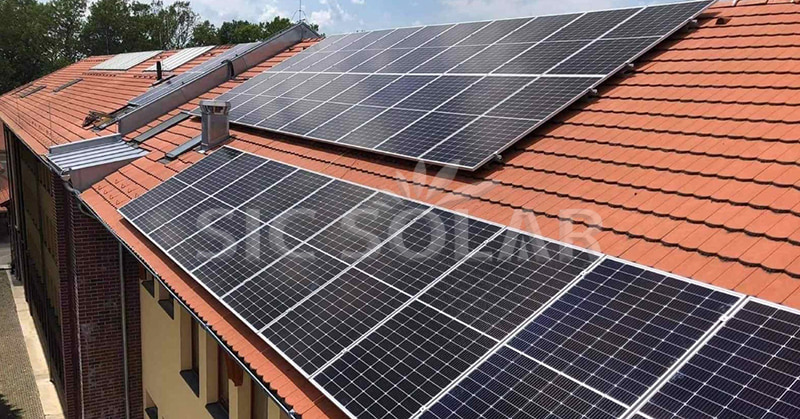
solar roof mounting

The first step in securing solar panels is choosing the right mounting structure. Rooftop systems usually require rails, clamps, and roof hooks or brackets that anchor the panels safely. These components must be compatible with the roofing material—whether it’s tile, metal, asphalt shingle, or slate. For example, tile roofs often use adjustable roof hooks that fit between tiles without breaking them, while standing seam metal roofs can use clamp systems that avoid drilling altogether.

Once the appropriate hardware is selected, the panels are attached to mounting rails that distribute weight evenly across the roof. This helps maintain structural integrity and prevents leaks. The rails are then fixed to roof hooks or brackets that are secured directly into the rafters or other strong structural points. Precision during this stage is essential, as misalignment can affect both the strength of the installation and the efficiency of the solar panels.

Another important factor is wind resistance. Panels must be able to withstand uplift forces during storms. This is achieved through robust fastening methods, weatherproofing sealants, and in some cases, ballast systems that weigh the panels down without penetration. Proper grounding of the system also ensures electrical safety and protects against lightning strikes.

For flat roofs, securing panels often involves ballasted mounting systems. These rely on weight rather than penetration, making them ideal for roofs where drilling could cause damage. Ballast blocks, usually made of concrete, are placed strategically to resist wind uplift while keeping the panels in place.

High-quality mounting systems are key to long-lasting solar performance. This is where companies like SIC Solar, a manufacturer and supplier of photovoltaic mounting brackets, play an important role. Their solutions are designed to fit different roof types and conditions, ensuring that solar panels remain secure, efficient, and safe for decades.

Ultimately, securing solar panels to a roof requires careful planning, the right hardware, and professional installation practices. With reliable mounting systems and proper attention to detail, solar panels can deliver clean energy while keeping both the system and the roof protected.

阅读全文......

What Are Solar Poles?

When most people think about solar installations, they usually picture panels fixed on rooftops or large ground-mounted arrays. However, another practical solution for supporting solar panels is the use of solar poles. These structures provide a strong and elevated base for panels, making them ideal for areas where roof space is limited or ground mounting is not feasible.

solar panel mounting pole

A solar pole is essentially a stand-alone mounting system where one or more solar panels are attached to a vertical pole anchored into the ground. Depending on the design, the pole may hold a single panel (often called a single-pole mount) or multiple panels arranged in series. The height and orientation of the pole allow for flexible installation in open areas such as fields, parking lots, farms, or even residential yards.

One of the key advantages of solar poles is space efficiency. Unlike large ground-mounted arrays that require significant land, pole-mounted systems can be placed in smaller areas without taking up too much space. They are particularly useful for powering standalone applications like streetlights, water pumps, and communication towers.

Solar poles also allow for better sunlight exposure. Because they are elevated, panels avoid shading from nearby structures or vegetation. Many designs include adjustable tilt mechanisms, enabling seasonal angle changes for maximum energy production. Some advanced systems even incorporate solar tracking, where the panels move with the sun throughout the day to capture more energy.

From an engineering perspective, stability is crucial. Solar poles must withstand heavy winds, rain, and other environmental factors. They are anchored deeply into the ground with concrete foundations or steel supports, ensuring long-term durability. The mounting brackets and clamps used to attach panels to the pole must be designed for strength, safety, and ease of installation.

This is where companies like SIC Solar bring value to the solar industry. As a producer and supplier of photovoltaic mounting structures, SIC Solar provides durable solutions that ensure solar poles are both reliable and efficient. Their focus on precision-engineered brackets and supports makes it easier to deploy pole-mounted systems in a wide range of applications.

Whether for residential, agricultural, or utility use, solar poles represent a versatile option in the solar mounting family. They make renewable energy more accessible in locations where other installation methods might not be suitable, while also offering a reliable and efficient way to generate clean power.

阅读全文......

What Is a Floating Solar Array?

As the demand for renewable energy grows, innovation continues to shape how and where solar power can be generated. One of the most exciting developments in recent years is the floating solar array. Unlike traditional rooftop or ground-mounted systems, floating solar involves installing solar panels on bodies of water such as lakes, reservoirs, ponds, or even dams. This unique approach addresses land constraints while unlocking new benefits for both energy and the environment.

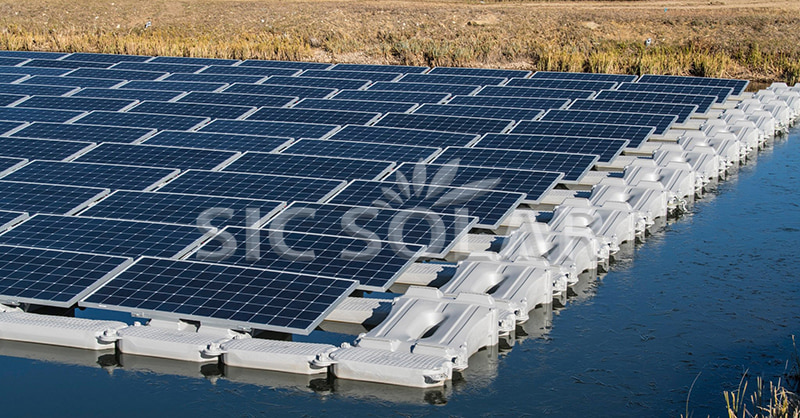
factory floating solar structure

A floating solar array consists of photovoltaic panels mounted on buoyant platforms that rest on the water’s surface. These platforms are anchored to the bottom or shoreline to keep the system stable. Electrical components and inverters are either placed on nearby land or integrated into floating structures. The result is a solar power plant that efficiently converts sunlight into electricity without occupying valuable land space.

One of the biggest advantages of floating solar is land conservation. In densely populated regions, finding suitable land for large-scale solar farms can be a challenge. By using underutilized water surfaces, floating solar frees up land for agriculture, housing, or other infrastructure needs.

Another benefit is increased efficiency. Water has a natural cooling effect on the solar panels, helping them operate at lower temperatures compared to ground-mounted systems. This cooling reduces heat-related efficiency losses, meaning floating panels often generate more electricity over time.

Floating solar arrays can also help reduce water evaporation from reservoirs and ponds, which is particularly valuable in hot or drought-prone regions. The panels provide shade, slowing down evaporation rates while also limiting algae growth that can negatively impact water quality.

From an environmental perspective, floating solar systems minimize habitat disruption since they are built on existing water bodies rather than clearing new land. They also integrate well with existing hydroelectric dams, allowing hybrid systems that combine solar and hydro power.

The durability and safety of a floating solar array depend heavily on the mounting structures used. The platforms must withstand waves, wind, and changing water levels while keeping the panels securely in place. Companies such as SIC Solar, which specializes in manufacturing and selling photovoltaic mounting brackets, play an important role in advancing this technology by providing robust and adaptable solutions. Their expertise ensures that solar panels can perform reliably even in challenging aquatic environments.

Floating solar is not just a clever solution to land shortages—it represents the next step in expanding renewable energy capacity worldwide. By harnessing the untapped potential of water surfaces, it offers a sustainable, efficient, and innovative way to generate clean power for the future.

阅读全文......

Kinsend continuously provides mounting support for photovoltaic projects in Singapore

Kinsend thanks many Singaporean EPC photovoltaic companies for their support, Kinsend with its high-quality solar mounting structure and professional design solutions, we provide the best security guarantee for all cooperative projects.


Advantages of Singapore's Rooftop Solar PV


Geographical and Climatic Advantages

Abundant Sunlight: As a tropical country near the equator, Singapore enjoys stable sunshine year-round, with an average daily peak sunlight hours of 4-4.5 hours, providing excellent natural conditions for solar power generation.


rooftop solar installation company


Core Strategy to Address Land Scarcity

Utilizing Idle Space: With limited land area and no possibility for large-scale ground-mounted solar power plants, leveraging the rooftop space of tens of thousands of public housing (HDB) blocks, industrial buildings, commercial complexes, and private residences is the optimal solution to "turn waste into treasure." This perfectly aligns with Singapore’s "vertical city" development concept.


Economic and Cost Benefits

Reducing Energy Costs: For HDB town councils and businesses, installing solar PV systems significantly lowers electricity costs for public areas (e.g., elevators, lighting, water pumps) or operational expenses. Through the "install-own-operate" model, town councils can enjoy cheaper electricity without upfront investment.


solar roof racking systems


Hedging Against Electricity Price Volatility: Solar power provides a stable energy source, reducing reliance on imported fossil fuels and mitigating the risks associated with fluctuations in international energy prices.

Environmental Benefits and Sustainable Development

Reducing Carbon Footprint: Solar PV is a clean energy source that supports Singapore’s ambitious goal of achieving net-zero emissions by 2050.


Enhancing Urban Resilience: Distributed rooftop solar PV systems contribute to a more decentralized and resilient energy network, reducing over-reliance on centralized power supply.

Green Image: For businesses, using green energy is a key way to fulfill corporate social responsibility (CSR) and meet environmental, social, and governance (ESG) goals, enhancing brand image and international competitiveness.


Strong Government Support and Planning

Policy-Driven: Through the SolarNova program, the government continuously aggregates public sector demand and conducts large-scale tenders, providing a stable and predictable market for the solar industry, attracting investment, and reducing costs.


Clear Targets: The government has set a target to deploy at least 2 gigawatts (GWp) of solar capacity by 2030, with rooftop solar PV as the absolute mainstay. This provides a clear direction for the industry.


For any design requirements of photovoltaic mounting projects, please feel free to contact us  : info@kinsend.com


rooftop photovoltaic system


阅读全文......

Are Roof Mounted Solar Panels Worth It?

As solar energy continues to gain popularity, one of the most common questions from homeowners and businesses is whether roof mounted solar panels are worth the investment. Rooftops are often the most convenient and cost-effective location for solar installations, but it’s important to weigh both the advantages and potential limitations before making a decision.

roof mounted solar

The biggest advantage of roof mounted solar panels is space efficiency. Roofs provide a large, often underutilized surface that is already exposed to sunlight throughout the day. By using this existing space, property owners avoid taking up valuable ground area that could otherwise be used for gardens, driveways, or recreational purposes.

Another factor is cost-effectiveness. Roof installations generally require fewer materials compared to ground mounted systems, which need additional framing and foundations. This often results in lower upfront costs. Additionally, roof mounted solar systems can improve property value, as buyers increasingly look for energy-efficient and environmentally friendly homes.

From a performance perspective, roofs can offer excellent sunlight exposure. When panels are installed at the right tilt and orientation, they can capture maximum energy during peak hours. Professional mounting systems help position the panels at angles that optimize efficiency and reduce shading issues.

However, there are some considerations. Roof condition is a critical factor—if the roof is old or needs repairs, it is usually recommended to address those issues before installation. Weight is another concern, as solar panels and mounting hardware add load to the roof structure. Using high-quality, lightweight mounting brackets reduces this risk while ensuring stability.

Maintenance access can also be more challenging on rooftops compared to ground mounted systems. This is why the design of the mounting system is so important. Well-engineered systems make installation and maintenance safer and easier. Companies like SIC Solar, which manufactures and sells photovoltaic mounting brackets, focus on providing durable and adaptable roof mounting solutions that balance safety, reliability, and ease of installation.

Despite these considerations, roof mounted solar panels remain a worthwhile investment for most property owners. They offer long-term savings on electricity bills, reduce dependence on the grid, and contribute to a cleaner environment. With the right roof condition and high-quality mounting systems, a rooftop solar array can serve as a sustainable energy solution for decades.

阅读全文......

Can I Mount Solar Panels Vertically?

When thinking about solar energy, most people picture panels installed at an angle on rooftops or ground-mounted frames, positioned to capture the maximum sunlight throughout the day. But what about vertical installation? Can solar panels be mounted vertically, and if so, what are the advantages and trade-offs?

The short answer is yes—solar panels can be mounted vertically. This setup is less common than traditional angled installations but is becoming more popular in specific scenarios. Vertical mounting involves positioning panels upright, either on building facades, fences, or specially designed vertical racking systems.

vertical mounted solar panels

One of the main benefits of vertical solar panels is their space efficiency. For properties with limited roof or ground space, vertical installation allows panels to be placed on unused surfaces, such as the sides of buildings or along property boundaries. This approach is particularly useful in urban environments where rooftops may be shaded or cluttered with HVAC equipment.

Another advantage is self-cleaning potential. Panels installed vertically accumulate less dust, debris, and snow compared to panels laid flat or at shallow angles. Rainwater naturally washes the surface, reducing the need for frequent cleaning and lowering maintenance costs.

From an energy production perspective, vertical panels are most effective when facing east and west. This allows them to capture sunlight during the morning and late afternoon hours, aligning well with peak electricity demand times. However, compared to south-facing tilted panels (in the northern hemisphere), vertical panels generally generate less overall energy across the year because they receive less direct midday sunlight.

Vertical installations can also enhance aesthetic and architectural integration. Building-integrated photovoltaics (BIPV), for example, use vertical solar panels as part of the exterior façade, blending energy production with modern design. This approach not only reduces energy bills but also contributes to sustainable building certifications.

The success of vertical solar projects relies heavily on the strength and adaptability of mounting systems. Panels need to be securely fixed to withstand wind loads and weather impacts. Companies like SIC Solar, which specializes in producing and selling photovoltaic mounting brackets, provide solutions that support vertical applications while ensuring durability and safety. Their systems are designed to handle structural challenges while offering flexibility for different site conditions.

While vertical solar panels may not always be the most efficient option in terms of maximum energy output, they offer unique benefits that make them suitable for specific situations. Whether on building facades, fences, or creative architectural designs, vertical mounting expands the possibilities of where solar power can be harnessed.

阅读全文......

How to Mount Solar Panels on Metal Roof Without Drilling?

Mounting solar panels on metal roofs is one of the most efficient ways to utilize renewable energy, as metal roofs are durable, long-lasting, and often already designed to support additional loads. Traditionally, installation involves drilling holes into the roof surface to secure mounting brackets. However, many property owners prefer to avoid drilling to protect the roof’s integrity and reduce the risk of leaks. Thankfully, there are effective ways to mount solar panels on a metal roof without drilling.

One of the most common solutions is using clamp-based mounting systems. These clamps are specifically designed to attach securely to the seams of standing seam metal roofs. Because the panels are held in place by gripping the raised seams, there is no need to penetrate the roofing material. This method not only preserves the waterproofing of the roof but also allows for a clean and quick installation process.

mounting solar panels on metal roof

Another option involves ballasted mounting systems, which use weighted structures to hold the panels in place. These systems are more common on flat metal roofs and rely on the weight of the ballast, such as concrete blocks, to keep everything secure. The advantage is that no holes are drilled, but it requires ensuring that the roof can handle the additional load.

Magnetic mounts are also an emerging technology, although they are not yet as widely used. These use strong industrial magnets to hold the mounting system in place on steel roofs. While convenient and easy to install, this solution is best suited for temporary installations or areas with lower wind loads.

When mounting solar panels without drilling, wind resistance and structural safety become even more critical. Panels must be properly secured to withstand strong gusts and adverse weather. High-quality clamps and racking systems designed for non-penetrating installations are essential to ensure both safety and long-term reliability.

This is where specialized manufacturers like SIC Solar play a key role. As a company producing and selling photovoltaic mounting brackets, SIC Solar offers solutions for standing seam and other metal roof applications that eliminate the need for drilling. Their systems are engineered to grip securely, maintain durability, and protect the roof structure while ensuring panels are optimally positioned for sunlight exposure.

Mounting solar panels on a metal roof without drilling is not only possible but also practical when using the right technology. With clamp-based or ballast systems, homeowners and businesses can enjoy the benefits of solar power while keeping their roofing intact and maintenance-free.

阅读全文......