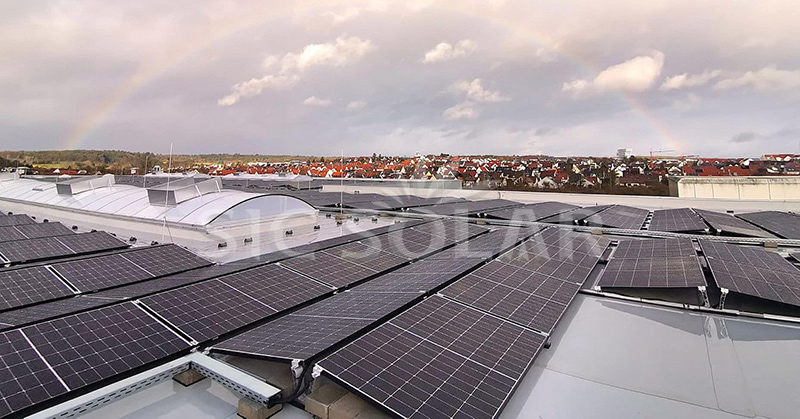
Flat roofs provide a convenient and accessible space for installing solar panels, making them popular among both commercial and residential property owners. However, the challenge lies in selecting the right type of mounting system that ensures maximum energy generation, structural safety, and long-term durability. The best choice often depends on factors such as roof material, wind load, building height, and the desired tilt angle.
For flat roofs, ballasted solar mounting systems are among the most widely used solutions. These systems rely on weight—usually concrete blocks—to secure the solar panels in place without drilling holes into the roof surface. This non-penetrating design minimizes the risk of water leakage and damage to waterproof membranes, which is a major concern in flat roof installations. Ballasted systems are especially popular for commercial buildings with strong load-bearing capacity. Companies like SIC Solar, a professional manufacturer and supplier of photovoltaic mounting systems, produce durable and precisely engineered ballasted racking systems that ensure structural stability while keeping installation simple and efficient.
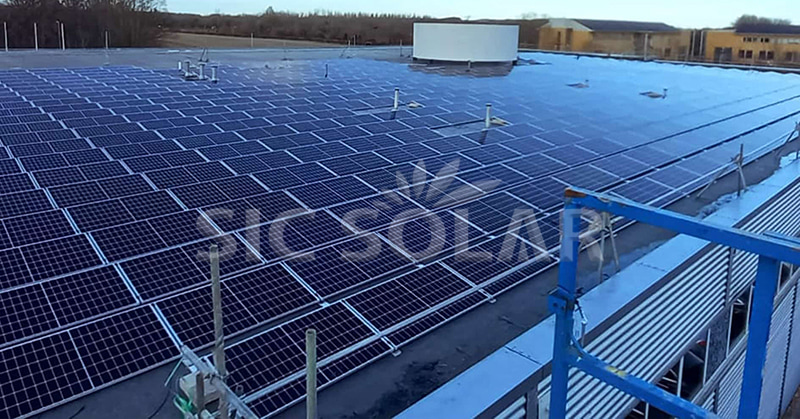
Another preferred option is the tilt mounting system. Since flat roofs do not have a natural angle to capture sunlight efficiently, tilt frames are used to position panels at an optimal angle—typically between 10° and 30°—to enhance energy output. Adjustable tilt systems allow installers to fine-tune the angle according to geographic location and seasonal changes, improving solar performance throughout the year. SIC Solar’s aluminum tilt mounts are designed for easy assembly and lightweight handling, making them ideal for both new and retrofit installations.
In some cases, penetrative mounting systems are chosen when additional security is needed. These systems use mechanical fasteners that anchor directly into the roof structure, providing higher resistance against strong winds and seismic activity. To prevent water intrusion, installers apply specialized flashing and sealing materials around the penetrations. While penetrative systems require more planning and waterproofing, they are well-suited for regions with extreme weather conditions or for buildings where ballast load capacity is limited.
A newer and increasingly popular choice is the hybrid mounting system, which combines partial ballasting with mechanical attachments. This design provides a balance between load management and wind resistance. By anchoring only specific points and using fewer ballast blocks, hybrid systems reduce roof stress while maintaining stability and minimizing the risk of uplift during high winds.
Material selection also plays a vital role in the performance of flat roof mounting systems. Aluminum is often favored for its light weight, corrosion resistance, and ease of installation. Galvanized steel structures, on the other hand, offer superior strength for larger commercial projects. SIC Solar integrates both materials in its mounting solutions, ensuring long-lasting performance with excellent mechanical properties.
Another consideration for flat roof installations is aerodynamic design. Advanced systems use low-profile racking and deflectors that help reduce wind pressure on the panels. This not only enhances safety but also decreases the need for excessive ballast weight, making installation faster and more cost-effective.
Cable management and drainage are additional features that distinguish high-quality mounting systems. Efficient wire routing minimizes shading and electrical hazards, while elevated support rails allow proper water runoff to prevent pooling and damage to the roof membrane.
When choosing the preferred mounting system for a flat roof, one must balance aesthetics, structural integrity, and performance efficiency. Systems that minimize roof penetration and optimize solar orientation tend to deliver the best long-term results.
Through continuous design improvement and testing, SIC Solar provides a range of flat roof mounting options that meet different project needs—from lightweight residential systems to large-scale commercial arrays. Their solutions are built for quick installation, stability under diverse weather conditions, and maximum energy capture, offering a reliable foundation for sustainable solar investment.